Your puppy is not fully protected until the DHPP series is finished, and the weeks between the first dose and the last are a genuine gap. DHPP guards against parvovirus, distemper, infectious canine hepatitis, and parainfluenza, and the first two are still diagnosed in Southern California every year. Parvo in particular lingers in soil and on sidewalks for months, so a puppy can pick it up long after the dog that shed it has moved on. In a puppy partway through the series, vomiting, diarrhea, refusing food, or sudden lethargy carries more urgency than it would in a grown dog, because dehydration at this age escalates in hours rather than days.
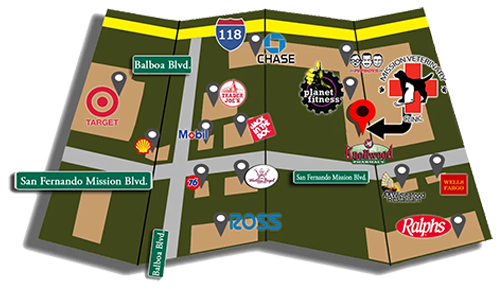
The hard part with a sick puppy is that you cannot tell from your couch whether this is a rough night or the start of parvo. Mission Veterinary Clinic in Granada Hills provides emergency and urgent care for dogs, with the diagnostics and fluids a sick puppy needs and extended overnight monitoring most nights. Our AAHA-accredited hospital can tell you whether your puppy should be admitted or is safe to watch at home, and we would far rather hear from you early than after a day of waiting. Because we triage by need and may reach capacity, call before you come in so we can help you decide what happens next.
The DHPP Basics for Puppies and Adult Dogs
- One DHPP injection builds immunity against four separate diseases at once.
- Puppies need several doses spaced a few weeks apart, and a partially vaccinated puppy is still vulnerable until a couple weeks after the final one.
- Parvovirus and distemper still circulate in Southern California, so keeping an adult dog current matters as much as the first-year doses do.
- Most dogs feel tired or a little sore for a day afterward, and anything more than that is worth a call to us.
Which Diseases Does the DHPP Vaccine Prevent?
DHPP protects against four diseases in one injection, and all four still circulate in the United States. None of them is limited to neglected dogs, and several persist in soil, on hard surfaces, or in local wildlife, which is why core vaccinations are recommended even for dogs who rarely leave home.
| Disease | What it attacks | How serious it gets |
| Canine distemper | Airways, gut, and nervous system | Frequently fatal, and survivors may keep permanent damage |
| Infectious canine hepatitis | Liver, kidneys, blood vessel lining | Anything from a mild fever to collapse within a day |
| Canine parvovirus | Intestinal lining and bone marrow | Life-threatening in puppies without hospital care |
| Canine parainfluenza | Upper airway | Usually mild, worse when it stacks with other bugs |
What Does Canine Distemper Do to a Dog?
Distemper is one of the most contagious viruses dogs encounter, passed through respiratory droplets, shared bowls, and contact with infected wildlife. Raccoons, skunks, and coyotes all carry it, which matters in Granada Hills neighborhoods that back onto open hillside. The illness tends to move through the body in a rough order:
- First few days: Fever, goopy eyes and nose, and a cough that looks like any other respiratory bug.
- Then the gut: Vomiting, loose stool, and a dog who stops eating.
- Weeks later: Twitching, circling, or seizures once the nervous system is involved.
There's no cure for canine distemper, so treatment is supportive care while the dog's own immune system does the fighting, and survivors can keep lasting neurologic damage like head tremors or twitching. Clusters still happen, and they move fastest through unvaccinated and partly vaccinated dogs.
How Serious Is Infectious Canine Hepatitis?
Infectious canine hepatitis comes from canine adenovirus type 1 and attacks the liver, kidneys, and the lining of blood vessels. Infected dogs pass the virus in their urine, sometimes for months after they look recovered, which is how it hangs around kennels, yards, and shared patches of grass.
The vaccine uses a close cousin, canine adenovirus type 2, which covers the sudden severe hepatitis illness, the quieter chronic liver damage that can follow it, and the milder respiratory infection type 2 causes on its own.
Why Is Parvovirus So Dangerous for Puppies?
Canine parvovirus targets the fastest-dividing cells in the body, such as the lining of the intestines and the bone marrow that makes white blood cells. A sick puppy loses the barrier that keeps gut bacteria out of the bloodstream at the same moment they lose the white blood cells needed to fight them, which is why parvo kills young dogs so fast.
Unvaccinated and partly vaccinated puppies carry the most risk, and Rottweilers, Doberman Pinschers, and German Shepherds are reported to get hit harder than other breeds. Signs usually pile up within a day of each other:
- Vomiting that won't stop: nothing stays down, not even water.
- Bloody or foul-smelling diarrhea: often what a family notices first.
- Sudden lethargy: a puppy playing in the morning who won't lift their head by evening.
- No interest in food: usually alongside a belly that hurts to touch.
What Else Looks Like Parvo in a Puppy?
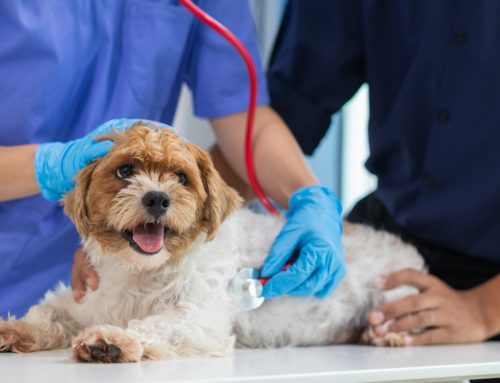
Vomiting and bloody diarrhea don't prove it's parvo. Intestinal parasites, Giardia, coccidia, a swallowed toy blocking the gut, and plain dietary upset all start out looking much the same, and some of those need a different treatment, so the visit starts with a test rather than a guess. We run the parvo test here, and we can admit a puppy who needs fluids and close monitoring. Parvo also spreads easily between dogs, so say so when you call and we'll tell you how to come in rather than walking a sick puppy through the lobby.
How Is Parvo Treated, and What Should I Not Do at Home?
Parvovirus treatment is intensive: IV fluids to replace the losses, anti-nausea medication, antibiotics for the bacteria crossing out of the gut, and hospital care, often several days, until the intestinal lining regrows. Caught early, many puppies come through it.
Syringing electrolyte drinks, giving over-the-counter anti-diarrheal medication, or waiting out one more night all waste the hours when fluids would still work. Never give a puppy human anti-diarrheals or pain relievers. A puppy who can't keep water down needs an IV rather than a bowl.
Where Can a Puppy Pick Up Parvo?
Parvo tolerates heat and freezing and survives most household cleaners, so a puppy can pick it up from a lawn or a strip of San Fernando Valley park grass that has stayed contaminated through an entire season. Keep your puppy off the ground anywhere that a dog with unknown history could have traveled; pet store floors, dog parks, city sidewalks, hiking trails, and dog-friendly restaurants are all a risk. Parvovirus particles can survive in the soil for seven to twelve months, and upwards of five years in damp, dark areas.
Does the DHPP Vaccine Cover Kennel Cough?
DHPP covers parainfluenza, one of the germs behind kennel cough, but not the whole group. Kennel cough isn't a single infection but a cluster of viruses and bacteria that tend to arrive together, which is why a fully vaccinated dog can still come home from a boarding stay with a cough, though often a milder and shorter one.
Parainfluenza typically looks like a dry, honking cough with some nasal discharge and a low fever, and most dogs stay alert and keep eating through it. Risk climbs anywhere dogs share air: daycare, grooming, training class, the dog park. In a puppy midway through the series, a flat-faced breed, or a dog already managing a heart or airway condition, a mild cough can slide toward pneumonia, so labored breathing needs to be seen rather than watched.
DHPP doesn't cover everything a dog may need:
- Bordetella: the bacterial half of kennel cough, which is why boarding facilities generally ask for it alongside DHPP before a stay.
- Rabies, leptospirosis, and canine influenza: each is a separate vaccine, and we can give them at the same visit.
When Should a Puppy Get DHPP Shots, and How Often After That?
Most puppies start DHPP somewhere around 6 to 8 weeks of age and get a dose every few weeks until at least 16 weeks, followed by a booster roughly a year later and then boosters at intervals after that. The exact spacing depends on the age at the first dose and the life the dog actually lives. For some at-risk dog breeds living in higher-risk situations, we may recommend vaccinating out until 20 weeks of age.
| Stage | What it usually looks like | Why it's built that way |
| Puppy series | A dose every few weeks, from about 6 to 8 weeks until at least 16 weeks | Antibodies from mom can block an early dose, so the series continues until those have faded |
| One-year booster | A single dose about a year after the last puppy shot | Carries short-term immunity into long-term immunity |
| Adult boosters | Every one to three years, depending on the product | Coverage tapers slowly, and higher-exposure dogs sit at the shorter end |
A nursing puppy carries antibodies from their mother that fade somewhere between about 6 and 16 weeks, and nobody can tell by looking when they've gone in a particular puppy. While those antibodies are still circulating they neutralize a vaccine before the immune system can respond to it, which is why the series keeps going to an age when they've faded in nearly every puppy.
Our veterinarians weigh the age your puppy started, how many doses they've had, and where they'll be going once they're cleared. A rescue adopted at 12 weeks with no paperwork needs a different plan than a puppy who started at 6 weeks.
Can My Puppy Still Get Parvo After Being Vaccinated?
Yes, especially before the series is done. You can consider your puppy fully vaccinated about two weeks after their last DHPP shot. Their immune system needs that time to respond to the vaccine, so hold off on the dog park a little longer. Until then, a puppy with several doses behind them can still catch parvo.
A few things leave a gap in protection:
- The series isn't finished: Antibodies from mom can cancel out an early dose, so a puppy with two or three shots may not be protected yet.
- The last dose is still kicking in: Immunity keeps building for about two weeks after the final shot.
- No vaccine is perfect: A small number of dogs don't respond fully, and fully vaccinated dogs occasionally catch parvo, though the illness is often milder.
- Boosters have lapsed: Protection in an adult dog fades slowly, and an overdue dog has less of it.
That's why symptoms still count. If your puppy has vomiting, bloody diarrhea, or sudden lethargy, call us even if their shots are up to date, and don't let the vaccine record talk you out of a visit. Tell us when the last dose was given, too, since a recent vaccine can cause a positive parvo test for several days afterward and changes how we read the result.
Is the DHPP Vaccine Safe for Dogs?
DHPP is among the better-tolerated vaccines in veterinary medicine, and most dogs show nothing at all afterward. The reactions we do see are usually mild and gone inside a day or two; serious ones are uncommon but arrive fast enough that the first hours matter.
- Mild and expected: Soreness where the needle went in, low energy that evening, a mild fever, or a small firm bump under the skin that softens over a couple of weeks.
- Rare and urgent: Swelling of the face or muzzle, hives, vomiting or diarrhea within minutes to a few hours, labored breathing, weakness, or collapse. These are true allergic reactions and they need treatment immediately, not overnight observation at home.
Most reactions begin within a few hours, so plan to stay where you can watch your dog for the rest of that day, and call the moment you see any of those urgent signs, even at two in the morning. We're open for urgent care and emergency treatment around the clock, so a vaccine reaction never has to wait for office hours. If your dog has reacted before, tell us before the next vaccine rather than after, because it changes how we handle that dose and how closely we watch them.
What Else Protects a Puppy Before the Series Is Finished?
In the weeks before the last dose, where your puppy walks, which dogs they meet, and how you clean up after a sick animal all shift the odds. Socialization matters in that same window, so the goal is controlled exposure rather than none.
- Socializing safely: The behavioral window for new people, surfaces, and sounds closes somewhere between 12 and 16 weeks, so waiting for the series to finish means missing most of it. The American Veterinary Society of Animal Behavior recommends starting socialization before the final vaccines are complete. Private yards with healthy adult dogs you know, carried outings, and puppy classes that require proof of vaccination give most of the benefit at a fraction of the risk.
- Places to skip for now: Dog parks, pet store floors, rest stops, and the sidewalk outside any boarding facility all mean unknown dogs and unknown stool.
- Cleaning that works on parvo: Diluted household bleach is one of the few disinfectants that reliably kills this virus on hard floors, crates, and bowls, and it needs real contact time instead of a quick wipe. Soil, grass, and gravel can't be disinfected at all, so keep a new puppy off any yard where a parvo puppy was sick.
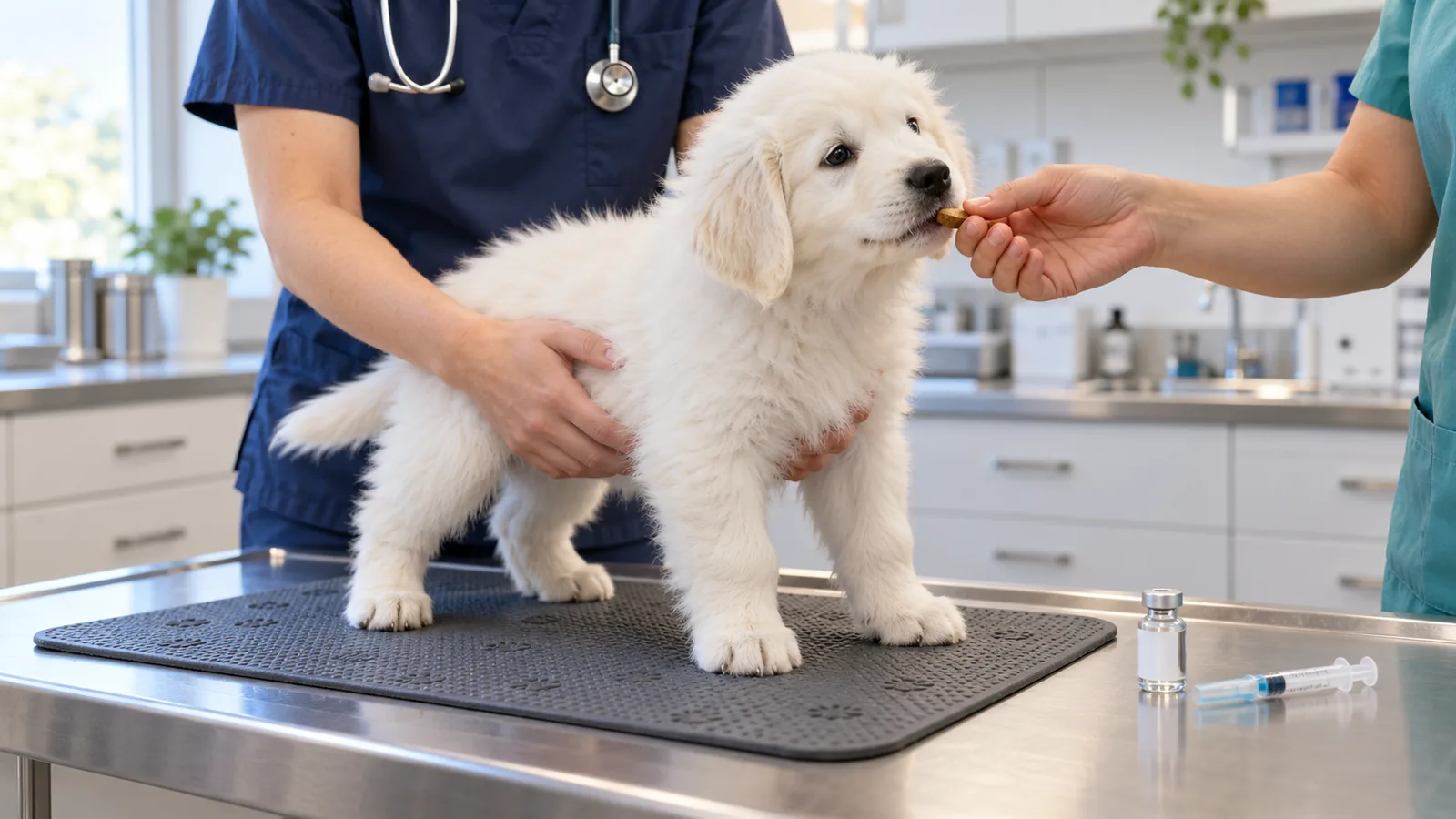
A vaccine visit is also a full puppy exam. We weigh your puppy, listen to the heart and lungs, feel the belly, and check a stool sample, and problems like intestinal parasites, heart murmurs, and hernias often turn up at a visit booked for a shot.
What Families Ask Us About DHPP Boosters and Titers
Can a Sick Puppy Still Get a DHPP Shot?
Whether a sick puppy can be vaccinated depends on how sick they are. A puppy running a fever, vomiting, or refusing meals usually should wait, because an immune system already fighting something may not respond well, and a reaction afterward becomes hard to separate from the illness. A mild, short-lived issue like one soft stool often doesn't change the plan. Either way, we examine them, treat what's going on, and give the dose once they're feeling better, which is normally a short delay rather than a restart.
Does a Lapsed Adult Booster Mean Starting the Series Over?
A lapsed adult booster rarely means starting from scratch. A dog who's overdue by a few months, or even a year or two, generally needs one dose to bring them back up to date. The exception is a dog with no vaccine history at all, or a history nobody can document, who may need two doses a few weeks apart to be considered covered. Either way, an overdue booster is worth handling now instead of waiting for the next annual exam.
Are Titers a Reasonable Alternative to Boosters?
Titer testing measures the antibodies already in a dog's blood against distemper, hepatitis, and parvovirus, and it's a real option for an adult dog whose family wants to avoid unnecessary doses or for one who has reacted badly before. Titers are much less useful in puppies, where a protective-looking number may reflect antibodies from mom rather than anything the vaccine did, and they say little about parainfluenza. Our doctors will talk through whether testing fits your dog or whether a booster is the simpler answer.
Keeping Your Dog Protected From Puppyhood Onward
Finishing the DHPP series is one of the most reliable ways to keep a fatal illness out of your dog's life, and the boosters afterward keep it that way. If you're starting a brand-new series, aren't sure when the last booster was given, or have a dog who's reacted to a vaccine before, reach out and we'll get you on the schedule at Mission Veterinary Clinic in Granada Hills.