Hip problems in dogs and cats usually have more than one path forward, and surgery is rarely the first one. Many pets do well for a long stretch on weight management, pain medication, joint support, and rehabilitation, and that is the right place to start for most hips. Surgery comes into the picture when that plan no longer controls the pain, or when the joint is too unstable to hold up. The right surgery can return the right patient to a comfortable, active life, and the choice comes down to your pet's size, age, diagnosis, and what the X-rays show.
Watching your dog or cat get slower on the stairs is hard, and the options in front of you can sound impossibly far apart. Mission Veterinary Clinic in Granada Hills begins where the decision actually gets made, with a hands-on exam and the digital X-rays that show what is really happening inside the joint. Our AAHA-accredited hospital can get your pet out of pain first, then go through the images with you and talk honestly about which option fits, including the orthopedic surgery we perform here. If your pet is limping, slow to rise, or no longer jumping the way they used to, talk it through with us.
What Your Pet's Hip Decision Really Comes Down To
- Most hip disease starts with a non-surgical plan, and plenty of dogs and cats stay comfortable on weight control, pain medication, and rehab for years before surgery comes up.
- An FHO removes the painful ball of the joint and lets the body build a false joint in its place, which suits cats and smaller dogs with good muscle.
- A total hip replacement rebuilds the joint with implants and restores close to normal mechanics, which fits bigger, athletic dogs and is done at a specialty surgical center.
- The right choice depends on your pet's size, age, diagnosis, and radiographs, not on which procedure sounds better on paper.
What Conditions Lead to Hip Surgery in Dogs and Cats?
Four problems send most pets toward a surgical conversation: hip dysplasia, a dislocated hip, Legg-Perthes disease, and end-stage arthritis. Surgery is rarely the first move on any of them. It becomes the answer once medication, weight control, and rehabilitation stop holding the pain down, or once the joint can no longer stay where it belongs.
Hip Dysplasia in Dogs and Cats
Canine hip dysplasia starts as a loose fit between the ball and the socket, and every step that lets the joint slide instead of glide wears cartilage away until arthritis sets in. That loose fit runs in the family for Labradors, German Shepherds, Golden Retrievers, and Rottweilers, and those breeds show up for this conversation more than most. Cats aren't exempt, and feline hip dysplasia goes unrecognized far more often than the canine version, because a cat with a painful hip quietly stops jumping onto the counter instead of limping across the kitchen floor where you'd notice.
Hip Luxation
Hip luxation means the femoral head has come out of the socket entirely, almost always after a car, a fall, or another hard impact. It’s more common in pets with hip dysplasia since the ball and socket don’t fit together as closely. A closed reduction under anesthesia sometimes holds, but a hip that slips back out within days needs a surgical answer. A dislocated hip is one of the orthopedic emergencies we treat around the clock, so call before you come in, since we run on walk-in triage and want to know a painful orthopedic case is on the way.
Legg-Perthes Disease
Legg-Perthes disease cuts off the blood supply to the femoral head, and the bone crumbles under ordinary weight. It turns up in small-breed dogs and young cats between roughly four and eleven months old, usually as a back-leg limp that gets worse instead of better. Once that bone has collapsed, it won't rebuild itself into a working joint. These young patients generally need it removed to be comfortable again.
Severe Hip Arthritis
Osteoarthritis in dogs and cats is the endpoint of a joint that has been unstable for years, and a cat who avoids a litter box with tall sides or sleeps on the floor instead of the windowsill is reporting pain just as clearly as a dog who is slow to stand up in the morning. Many pets hold at this stage for a long time on medication and home changes, and surgery becomes the next question only when that plan stops working.
Can Hip Pain Be Managed Without Surgery?
Most dogs and cats with hip disease are managed without surgery, and many never need an operation at all. Conservative care is the right call while pain stays controlled and the joint is stable enough to carry weight, and it works because several small levers pull together rather than one medication carrying the whole load.
- Weight control: Body weight is the heaviest thing a bad hip carries, and taking even a little off a dog or cat changes how that joint feels within weeks. This is the piece families control entirely at home.
- Pain medication: Prescription anti-inflammatories, gabapentin, and a monthly injectable arthritis medication for dogs, with a feline version for cats, all have a place. We build pain management around your pet's age, kidney values, and liver values. That is the reason bloodwork comes first.
- Joint supplements: Joint supplements built around omega-3 fatty acids, glucosamine, and chondroitin belong in the plan as support rather than as the plan itself, and quality varies enough between products that where you buy them matters.
- Rehabilitation and home setup: Muscle is what stabilizes a loose hip, and structured exercise beats crate rest for most patients. Rugs over slick floors, a ramp at the couch, and a low-sided litter box take away the moments that hurt most.
Your own medicine cabinet is off limits here. Ibuprofen, naproxen, and acetaminophen harm dogs and cats at doses that look harmless to us, and acetaminophen alone can be fatal for a cat. Working a sore pet harder to loosen the joint up backfires as well.
What Is an FHO, and Which Pets Is It Best For?
A femoral head ostectomy, usually shortened to FHO, removes the ball at the top of the femur, and with it gone there is nothing left to grind against the socket. The body fills that space with scar tissue and builds a false joint, which works best in cats and smaller dogs, where muscle can take over the work that bone used to do.
How an FHO Works
Nothing is implanted. The femoral head and neck come out, and over the following weeks fibrous tissue forms a cushioned connection between the pelvis and the thigh bone. The stride on that side often ends up a little shorter. What goes away is the bone-on-bone contact that caused the pain in the first place.
Which Pets Are Good Candidates for an FHO?
Body weight matters more than breed here. Dogs under roughly 40 to 50 pounds tend to do well, and cats of nearly any size do beautifully, since a 10-pound body asks very little of a false joint. Young patients with Legg-Perthes are close to ideal, because the bone is already failing and nothing useful is lost by taking it out. An FHO is also the practical choice when a replacement isn't possible. Muscle mass is the thing to watch, since a well-muscled patient carries a false joint far better than a thin one.
What FHO Recovery Looks Like
Most patients put the foot down within days and use the leg steadily by six to eight weeks, with improvement continuing for months after that. Building muscle around the false joint is the entire mechanism that makes an FHO work. That makes veterinary physical rehabilitation, meaning controlled leash walks, underwater treadmill sessions, and targeted strengthening exercises, a core part of the recovery rather than an optional add-on. Acupuncture and laser therapy keep some patients comfortable enough to do that work. Cats tend to look ready before they are. A low-sided box, food at floor level, and a closed door on the tallest furniture get most of them through the first few weeks.
What Does a Total Hip Replacement Involve?
Total hip replacement swaps out both halves of the joint, a prosthetic femoral head riding in a new socket, and the hip moves the way it was built to move. Success rates in well-chosen patients run above 90 percent. A board-certified surgeon performs it at a specialty center, and we coordinate that referral.
How a Hip Replacement Is Done
The ball and neck come off the way they do in an FHO, but then a metal stem seats down inside the femur with a new head on top, and a cup goes into the socket. Those components are either cemented in place or press-fit tightly enough for bone to grow into them. Any active infection in the body, including skin disease and dental infection, has to be cleared first, since bacteria travel through the bloodstream and settle on implants. Our team can work up itchy or infected skin and take dental X-rays ahead of a referral, which keeps the surgery date from getting derailed.
Which Pets Are Better Suited to a Hip Replacement?
Size and expectation drive this one. Large and giant breeds, working and sporting dogs, and any dog whose family wants close to normal athletic function back are the patients specialists steer toward a replacement most often. Skeletal maturity matters too, and growth plates generally need to be closed first. Cats can receive replacements at centers carrying feline-sized implants, though an FHO handles most feline hips well enough that it's rarely necessary.
What Recovery From a Hip Replacement Requires
Strict restriction for eight to twelve weeks is the whole game: no stairs, no jumping, no slick floors, no off-leash time, and short leash outings only until the surgeon releases the patient. The implant is stable from day one, but bone needs that window to lock everything into place, and one bad landing off the back of the couch can undo it. Cats need their vertical world closed off, which usually means one room, no cat tree, a blocked windowsill, and a box they can step into. Most dogs are back to full function by three to four months. If a pet who was using the leg suddenly won't bear weight on it, or the incision turns hot, swollen, or starts draining, that needs to be seen the same day rather than at the next recheck, because a dislocated implant and an implant infection are both time-sensitive.
Which Fits Your Pet, an FHO or a Total Hip Replacement?
Size and goals separate these two procedures: an FHO trades some mechanics for a hip that no longer hurts, while a replacement rebuilds the joint itself, which is what a 90-pound Shepherd needs in order to move normally again.
| FHO | Total hip replacement | |
| The joint | Ball removed, scar tissue forms a false joint | Ball and socket both replaced with implants |
| Best size range | Cats and dogs up to roughly 40 to 50 pounds | Medium to giant dogs, cats at select centers |
| Where it's done | A general practice with orthopedic surgery capability | Specialty surgical center |
| Recovery | Early weight-bearing, rehab-driven, weeks to months | Strict restriction for 8 to 12 weeks |
| Long-term function | Comfortable with a modified gait | Close to normal gait and athletic use |
| Rehab | Required, it's what makes the surgery work | Structured and surgeon-directed |
| Relative cost | Lower | Higher |
Where a particular pet lands between those two columns isn't always obvious on paper, and our doctors weigh the images against body condition, muscle, age, the other joints, and what a normal week looks like in your house.
Should My Puppy's Hips Be Checked Early?
Large-breed puppies, fast growers, and any young dog with a bunny-hopping gait are worth imaging before anything hurts. A set of positioning radiographs read against breed norms is what hip dysplasia screening actually involves, and in a high-risk puppy those films can show a loose joint months or even years before the first limp. A young dog with loose hips and no arthritis yet has choices that close off later, and even the non-surgical ones, such as holding a lean body condition and steering play away from repetitive high-impact landings, do more good before the joint has remodeled.
What Should a Growing Puppy at Risk Eat?
How fast a puppy grows and how much calcium comes with that growth both shape the risk of developmental orthopedic conditions. For a dog whose hips are already a question mark, a large-breed puppy formula and a measured cup beat a bowl left full all day. Those diets are worth staying on until the skeleton finishes growing, and staying lean through adulthood matters just as much.
Which Surgeries Help a Young Dog With Loose Hips?
Two preventive procedures exist for puppies caught before arthritis sets in, and both are time-sensitive. Juvenile pubic symphysiodesis is a short procedure done between roughly 12 and 20 weeks of age that fuses a strip along the pelvic floor, and the rest of the pelvis then grows into deeper coverage over the femoral heads. That window closes for good at about five months. A pelvic osteotomy cuts the pelvis and rotates the sockets down over the femoral heads, an option for dogs under roughly ten months old who still have loose hips but no arthritis on their radiographs yet. Neither one is available once arthritis is established, which is the real argument for early films in an at-risk puppy.
How Do We Help Families Decide About Hip Surgery?
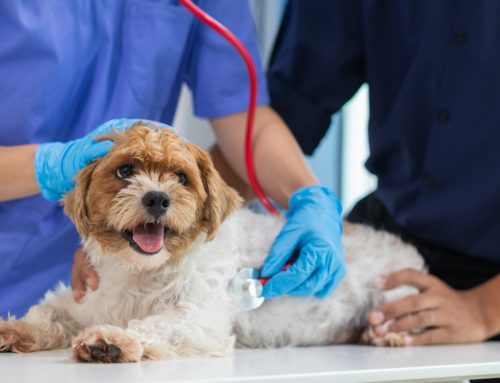
Every hip decision starts with an orthopedic exam and digital X-rays, because a back-leg limp can come from a hip, a knee, or a spine, and the images sort that out. From there, our veterinarians go through what the films show and what each option would mean for your pet.
Comfort comes before any decision. That might mean pain medication to start, sedation that lets the hips be positioned properly for imaging, or hospitalization when a dislocated joint needs care right away. Since we're open around the clock, a hip that gives out at two in the morning doesn't have to wait for daylight, though calling first matters, because we triage by need and can reach capacity. When the answer is a referral, we make the introduction, send the images ahead, and stay with you on pain control before and after the surgery.
Questions We Hear About Hip Surgery in Dogs and Cats
Will my dog always limp after an FHO?
Most dogs use the leg well and comfortably, though the gait usually isn't identical to the other side. You might notice a slightly shorter stride, or a limp that appears after a long hike and fades with rest. Cats often look completely normal to everyone but their veterinarian. How much difference remains depends heavily on muscle. That is the reason rehab matters as much as it does here.
Is an FHO a last resort?
An FHO isn't a fallback, though it's often mistaken for one. For a cat, a small dog, or a young patient with Legg-Perthes, it's frequently the first and best recommendation, and a 25-pound terrier with a painful hip has a strong chance of running normally again afterward. The trouble comes when the procedure is asked to hold up a body too heavy for a false joint.
Can both hips be treated, or only the worse one?
Both hips can be addressed when both hurt, but almost never during the same anesthesia. Surgeons stage them to leave your pet one good leg to stand on, and the gap between procedures is typically a few months. Many dogs with dysplasia on both sides only ever need one surgery, because taking the pain out of the worse hip frees up enough comfort for a conservative plan to hold the other one.
Taking the Next Step on Your Pet's Hip Pain
Hip decisions almost never have to be made today. What does need to happen today is comfort, followed by a clear look at the joint. Then the choice in front of you rests on something real instead of guesswork. Mission Veterinary Clinic is open around the clock in Granada Hills, and we'd rather see a limping dog or a cat who has stopped jumping early, while every option is still open, than after the joint has made the decision for everyone. If your pet is slowing down, schedule an orthopedic evaluation and let's look at those hips together.